
Acne Scar Treatment In Malaysia
Acne scars are the result of damage to the skin that occurs as a result of severe acne. When the skin experiences inflammation with acne breakouts, it can lead to changes in the skin’s texture and pigmentation. Once an acne scar is formed, it can be permanent if not treated.
You are not alone if you’re dealing with acne and acne scars! It is the most prevalent skin condition in the world. 80% of individuals aged 15 to 30 will experience it at some point, with 1 in 5 experiencing scarring as a result. Meanwhile, 69.9% of individuals in Malaysia[2] experience moderate to severe scarring.


What Is Acne Scar?
Acne scars are a result of the skin’s natural healing process after severe acne lesions or inflammatory breakouts. Without undergoing scar removal procedures, acne scars can be emotionally distressing for individuals and may affect their self-esteem.
The severity and type of scarring can vary widely from person to person. In Malaysia, the factors commonly identified include genetics, skin type, and the nature of the acne breakouts.
Types Of Acne Scars
Acne scars are typically classified into two main types:
Atrophic Scars: These are the most common type of acne scars. They result from a loss of tissue. There are three subtypes:
- Ice Pick Scars: These are deep, narrow, and pitted scars that resemble the marks left by an ice pick or needle.
- Boxcar Scars: These are broader, box-like depressions with sharp edges.
- Rolling Scars: These scars have a wavy, rolling appearance due to the unevenness of the underlying tissue.
Hypertrophic and Keloid Scars: These are raised scars that form when the body produces too much collagen during the healing process. Hypertrophic scars remain within the boundaries of the original acne lesion, while keloid scars extend beyond it.

Factors Contributing To The Formation Of Acne Scars:
The formation of acne scars is influenced by several factors, including:
Severity and Type of Acne
The more severe and inflammatory the acne, the higher the risk of scarring. Cystic acne and nodules, which are deep and inflamed lesions, are more likely to lead to scarring.
Age
Younger individuals may be more susceptible to scarring as their skin has a higher capacity for collagen production, which can lead to overproduction and raised scars.
Hormonal Factors
Hormonal fluctuations, such as those that occur during puberty, menstruation, pregnancy, or polycystic ovary syndrome (PCOS), can increase the likelihood of acne and subsequent scarring.
Genetics
Some individuals may be genetically predisposed to develop scars more easily than others. Genetic factors can influence the skin’s natural healing process and collagen production.
Picking and Squeezing Pimples
Manipulating or popping pimples can worsen inflammation and damage surrounding tissue, increasing the likelihood of scarring.
Use of Certain Medications
Some medications, such as corticosteroids and certain oral contraceptives, can affect the skin’s response to acne and potentially contribute to scarring.
Skin Type
People with certain skin types, particularly those with darker skin tones, may be more prone to developing post-inflammatory hyperpigmentation (dark spots) or keloid scars.
Delayed or Ineffective Treatment
Delaying or not receiving proper treatments in Malaysia for your acne condition can allow it to progress and become more severe, increasing the risk of scarring.
Skin Care and Product Use
The use of harsh or comedogenic (pore-clogging) skincare products and inappropriate treatments in Malaysia can exacerbate acne and lead to scarring if not managed properly.
How Does Acne Cause Scars?
Acne cause scars through a complex process that involves inflammation, tissue damage, and the body’s attempt to repair itself.
01.
Inflammation: When you have an acne breakout, the hair follicles become clogged with excess sebum and dead skin cells. This environment is conducive to the growth of the acne-causing bacterium, P. acnes. As your immune system responds to the presence of P. acnes and the inflammation caused by the clogged follicles, the affected area becomes red, swollen, and painful.
02.
Tissue Damage: Inflammatory acne lesions, such as papules, pustules, nodules, and cysts, can be particularly damaging to the skin. These lesions can extend deeper into the layers of the skin, causing damage not only to the surface but also to the underlying tissue.
03.
Healing Process: The body’s natural response to any injury, including acne lesions, is to initiate the healing process. During this process, the immune system works to remove damaged tissue and bacteria, while also attempting to repair and rebuild the affected area.
04.
Collagen Production: Collagen is a protein responsible for the skin’s structural integrity. During the healing process, the body produces collagen to repair damaged tissue. How collagen is produced and arranged in the healing area can determine whether a scar forms.
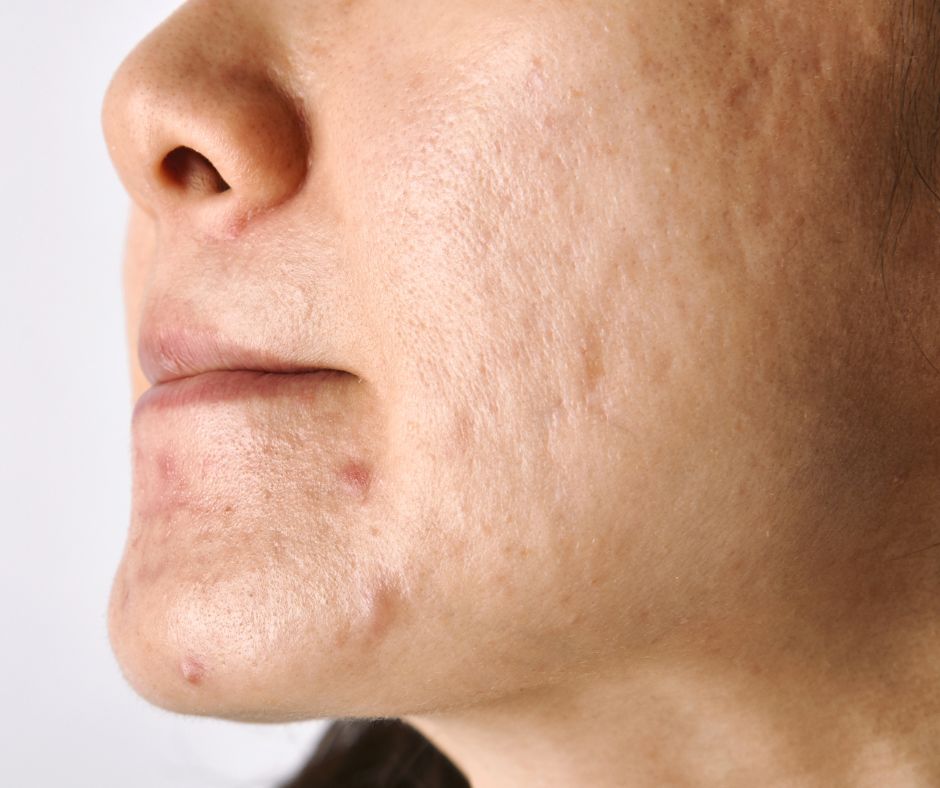
Are Acne Scars Permanent?
Acne scars can be permanent, but the extent of permanence and the visibility of the scars can vary widely from person to person. The likelihood of acne scars being permanent depends on several factors, including:
Type of Scarring: The type of acne scar plays a significant role in its permanence. There are different types of acne scars, including icepick, boxcar, rolling, and hypertrophic scars. Some types, like hypertrophic scars, are more likely to be permanent, while others may fade over time.
Severity of Scarring: The more severe the acne scarring, the greater the chance it may be permanent. Deep and extensive scars are more challenging to address effectively via scar removal procedures.
Skin Type and Genetics: Individual factors, such as skin type and genetics, can influence a person’s propensity for scarring. Some individuals may naturally have a greater tendency to develop scars.
Early Treatment: Undergoing prompt and effective acne treatment in Malaysia can reduce the risk of scarring. Early intervention can help prevent severe inflammatory lesions that are more likely to lead to scars.
Skincare and Sun Protection: Proper skincare and sun protection are essential to prevent further damage to the skin and maintain the results of scar treatment. Failure to protect the skin from the sun can exacerbate the appearance of scars.
Treatments To Reduce Acne Scars
Several treatments are available in Malaysia to reduce the appearance of acne scars. The choice of treatment depends on the type and severity of the scars, individual preferences and skin types. It’s essential to consult a professional to determine which approach is suitable.
Here are some common treatments for reducing acne scars:
PicoGlow Laser Treatment
Pico Glow™ Laser is an advanced picosecond skin treatment in Malaysia for acne scars and various skin conditions. It delivers ultra-short pulses of energy to target pigment and stimulate collagen production. Acne scars are addressed by triggering skin healing abilities to stimulate collagen production without damaging your surrounding skin.
Topical Treatments
- Retinoids: Topical retinoid creams like tretinoin can promote skin cell turnover and stimulate collagen production, helping to improve the appearance of scars over time.
- Vitamin C: Topical vitamin C serums can brighten the skin and help fade dark spots associated with post-inflammatory hyperpigmentation.
Chemical Peels
Chemical peels involve applying a chemical solution to the skin, which exfoliates the top layer and stimulates collagen production.
Superficial peels can improve the appearance of mild acne scars, while deeper peels may be necessary for more severe scarring.
Subcision
- Retinoids: Topical retinoid creams like tretinoin can promote skin cell turnover and stimulate collagen production, helping to improve the appearance of scars over time.
- Vitamin C: Topical vitamin C serums can brighten the skin and help fade dark spots associated with post-inflammatory hyperpigmentation.
Microneedling
Microneedling treatments such as Sylfirm X, also known as collagen induction therapy, uses tiny needles to create micro-injuries in the skin. This stimulates collagen and elastin production, helping to fill in and smooth out scars.
Dermabrasion
Dermabrasion procedures in Malaysia involve removing the top layer of skin with a rapidly rotating brush or diamond-tipped instrument. It can help to address deep acne scars but may require downtime for recovery.
Frequently Asked Questions on Acne Scar Treatments in Malaysia
We gathered the answers to some popular questions below. If you can’t find your answer below, feel free to contact us. V Medical Clinic will be happy to help.
Can all types of acne cause scars?
While any type of acne can potentially lead to scarring, severe and inflammatory acne lesions, such as cysts and nodules, are more likely to result in scars.
Is there any downtime for acne scar treatments?
Yes, there may be minimal downtime for many acne scar treatments. This varies in duration depending on the type and intensity of the treatment you receive in Malaysia. However, it can be tailored to minimise downtime where necessary.
Is it possible to completely remove acne scars?
Complete removal of acne scars is possible. You may see significant improvement in appearance with the right treatments in Malaysia.
Are all acne scars permanent?
Acne scars can be permanent, but various treatments can significantly improve their appearance.
Do acne scars fade over time on their own?
Some mild acne scars may fade over time, but it will take months and even years. Without treatment, acne scars are likely to be permanent. Many scars require active treatment to see significant improvement.
Can all skin types and tones be treated for acne scars?
Acne scar treatments are suitable for various skin types, skin tones and types of scars, such as common ice pick scars, rolling scars, and box scars. Your treatment centre in Malaysia will advise further during the consultation.
Can acne scars be prevented?
Early and effective acne treatment can help reduce the risk of scarring. Avoiding picking or squeezing pimples and using proper skincare techniques can also help prevent scars.
What should I do to care for my skin after acne scar treatments?
Proper post-treatment skincare, including sun protection, is essential to maintain results and prevent further damage.
Are there any side effects or risks associated with acne scar treatments?
Potential side effects and risks vary depending on your chosen acne scar treatment in Malaysia. Consult with a professional to understand each option’s specific risks and benefits.